Wednesday, September 26, 2012

Lawn Pests Can Lead to Hungry Critter Invasion

Suspected skunk damage to lawn due to their feeding on white grubs in the soil


"This looks like predators feeding on the white grubs. Skunks make 2-3 inch diameter holes just through the thatch. A single skunk will make about 100 holes in one night. The raked areas are probably caused by raccoons. They pull back the turf in areas 5 to 18 inches long and about 5-6 inches wide."

"They need to control the white grubs before reseeding or re-sodding because the grubs will kill the new grass. Controlling the white grubs will eliminate the mammal predator problem." - Phil Nixon, U of I Extension Entomologist

Question:  Will the skunks go away after I treat for the grubs?

Answer:  "The skunks have probably been there for years and will continue to be there. They will stop damaging the turf once the grubs are dead. Skunks are usually secretive and nocturnal, so most people don’t see them. Skunks are probably in almost every residential neighborhood in the U.S., along with rabbits, raccoons, and frequently coyotes. Residential neighborhoods provide more diversity of harborage and food than most natural areas, so wildlife numbers in them has been higher than in more rural areas since the 1960’s." - Phil Nixon, U of I Extension Entomologist


Suspected bird damage to lawn due to their feeding on white grubs in the soil

"This photo looks like bird damage. Insectivorous birds such as starlings, blackbirds, robins, cowbirds, and cuckoos will chicken-scratch the turf away to get to the grubs. " - Phil Nixon, U of I Extension Entomologist

Wednesday, September 19, 2012

Soybean Stress Disease


This is one of the many soybean samples that we have started to receive late in the season.  As always, we evaluate the plants for disease.  What do we know about this field?  This is the second time in a row that it has been planted to soybeans and it was previously pasture ground before that.  There has been no soil test done to evaluate fertility.  Most of the field is having problems, which leads me to believe that the main problem is not a disease.

There were several plants that appeared to have insect injury on the stems and pods.  It is difficult to know what type of insect fed on the plants without seeing the actual insect; however we suspect that it may have been bean leaf beetles. 

The stems of all the plants were split and a few of the plants consisted of a dark pith.  This area was cultured to determine what was causing this darkening of the inner stem.  Sometimes we isolate various pathogens, but in this case, we isolated a fusarium sp. and this points to Fusarium blight or wilt. The following is information about this disease was taken from the Compendium of Soybean Diseases:  Symptoms of this disease will appear midseason during hot weather, particularly on plants growing in sandy soils.  This disease has not been reported in seedlings.  The most characteristic symptoms is a black or brown of vascular system in roots and stems, which is evident when stems are split.  Leaves of affected plants may become chlorotic, wither, and eventually drop.  Flaccid leaves and wilting of stem tips are most common on young plants.  Pods of infected plants are often poorly developed, but root rot is minor.  If available, cultivars with resistance to Fusarium and soybean cyst nematodes should be grown.  High quality seeds should be planted in warm, well-drained soil, and cultivation practices that prevent or reduce soil compaction and promote favorable soil moisture should be used.  Good soil fertility should be maintained.  Crop rotation with non-hosts may reduce inoculum levels.

The roots of the soybeans were examined and found to be somewhat infected with Rhizoctonia sp. The Compendium of Soybean diseases states that as the season progresses, root symptoms can be found on the plants at the advanced vegetative to reproductive growth stages.  These plants may have been infected as seedlings and have lesions that are enlarging to girdle the stems (as seen on this sample).  Infected plants can be stunted, yellow, and have poor root systems because lateral roots often decay, leaving only the taproot and secondary roots.  Wilt symptoms associated with root rot occur throughout the early reproductive stages, when the disease occurs with warm, dry weather, herbicide injury, soybean cyst nematode damage, and other stresses.  Diseased plants first appear in areas where water and nutrients are poor, such as on hillsides, and may be scattered in lightly infested fields or in circular, discolored areas in heavily infested fields.  Disease patches are sometime elongated, following the direction of tillage.  There is no resistance available for R. solani in soybeans.  Good cultural practices promote seedling health during early stages.  Other stresses, such as herbicide injury, poor soil, insect damage, and feeding by SCN should be reduced.

Can we blame this field's problems on disease?  The answer is no. I am sure some of the blame can be put on the hot and dry weather, but further investigation will need to be done to find out if other stresses could be causing these soybeans to be more vulnerable to these diseases.

Thursday, September 13, 2012

Pepper -Which came first? Sunscald or Alternaria infection?

Alternaria sp. fungus that has infected a bell pepper with suncald.

This bell pepper sample had a round, necrotic area with black fungal growth, on the surface of the fruit. Based on the symptoms of the sample, it appeared to be sunscald, an environmental problem. This problem arises when the pepper is exposed to high levels of sunlight under high temperatures. The dead tissues are only present on the side of the fruit that is exposed to sunlight.

In addition, this sample appeared to have a black fungal growth, covering the sunscald area.  This is an Alternaria sp. (a fungus pathogen) that can invade the damaged tissues (from sunscald or other issues) on the fruit and can continue to cause injury. 

Alternaria sp. is controlled by avoiding conditions that predispose peppers to infection.  There are no approved fungicides or biocontrol agents known for postharvest application to pepper fruit.  If possible, planting should be scheduled so that harvest does not occur during very hot or cold weather, or drought.  Grow pepper cultivars that provide good shading of fruit and be sure that the fertilization includes adequate calcium.

Bell pepper with sunscald.
Certain varieties of the peppers can be more sensitive to sunscald. In lieu of the recent high temperatures and sunlight, it is recommended to plant varieties of peppers that are more tolerant towards the condition.  For example, if you continue to have problems with sunscald, you may try to grow another pepper variety. You can also try to encourage more of a canopy to shade the peppers from the sun (culturally as well as adding fertilizer (N).

Thursday, September 6, 2012

Pythium Damping-off at the Soil line of Cucumber


Pictures courtesy of Mike Roegge


Pictures courtesy of Mike Roegge

Pictures courtesy of Mike Roegge


No greenhouse operation is immune from possible disease problems.  The U of I Plant Clinic received this cucumber sample from a greenhouse that was growing cucumbers in a soil-less medium.  The symptoms were rotting in the lower part of the stem, near the soil line, of most of their cucumber crop.

The rotted tissue at the soil line was examined under the microscope at the U of I Plant Clinic and many oospores were found embedded within that tissue.  The symptoms, along with the presence of oospores embedded within the diseased plant tissue, is most likely due to pythium damping off at the soil line.

Oospores seen within the rotted tissue under the microscope
Plants will develop a watery rot in the taproot and hypocotyl at or near the soil  line.  Decline, necrosis, or sudden wilt (collapse during the heat of the day) are some symptoms that can occur after infection takes place.  Several species of Pythium can be involved.  Conditions favorable for disease development can differ depending on the pathogen species, but most likely cool and wet conditions are favorable for disease infection.

I consulted with Dr. Babadoost, U of I Extension Fruit and Vegetable Plant Pathology Specialist, to provide possible management solutions for this disease in this particular greenhouse operation.  He recommended that first and foremost, that they cut back on watering these plants as much as possible.  In addition, they may want to increase the temperature in the greenhouse, if possible.  As always, sanitation is very important.  They will not be able to save the infected plants, but to provide protection for unaffected or future cucumber plantings, they may want to apply Phosphite products or metalaxyl (Apron, Ridomil, Subdue) fungicides.

Friday, August 17, 2012

A Few Abiotic Problems on Tomato

Thanks to "Mother Nature" in 2012, many gardeners and commercial growers have been battling abiotic problems of tomatoes!  Many have been taking notes and comparing problems on tomato cultivars that are more susceptible to abiotic conditions on fruit such as Yellow Shoulder, Sunscald, Rain Check, and Fruit Cracks.  Other abiotic problems on tomato fruit are Blossom end rot, Catface, Spider Track, Puffiness, and Internal White Tissue.

The pictures below have symptoms that are suspected to be Rain Check.  

Rain check is the many, tiny concentric cracks that form on the shoulder of the fruit.  Damage will be most visible on the exposed, mature green, and possibly breaker fruit after rains; but unexposed fruit or small, immature green fruit sometimes be affected as well.  This problem is mostly observed on large, fresh-market tomatoes, rather than on smaller fruited cultivars. If conditions are right, black shoulder can occur (as seen in the pictures below.)

The cause of rain check is not known.  The rain might alter the fruit temperature or water uptake.  This, in turn, may hinder the development of the shoulder epidermis.  Another theory is that the rain could promote this problem.  This abiotic disease is often worse when dry periods are followed by heavy rains.  

Cultivars can vary in their susceptibility to rain check.  Those tomato cultivars that have good leaf cover to protect tomatoes and good epidermis characteristics seem to be more tolerant of rain check.  Glossy fruit tends to have less rain check than dull fruit.  

Management:  Choose tolerant cultivars and cultural practices that reduce fruit exposure.   


Another abiotic problem on tomato fruit (as seen below) is called zippering, which is a thin, brown, necrotic scar, starting at the stem and can extend partly or all the way to blossom end.  This long scar has transverse scars across it, which resembles a zipper.  Often times, there is only one zipper that forms per fruit, but there could be several zippers.  

The cause of zippering is anthers that attach to the ovary wall of the newly forming fruit and seems to be more pronounced in cool weather, but can occur during other weather conditions.  Tomato cultivars will vary in their susceptibility.

Management:  Grow tolerant cultivars and maintain proper temperatures when growing in a greenhouse.  


In conclusion, how can you try to avoid most of the abiotic diseases of tomato fruit:

  • Fight with Mother Nature
  • Provide even watering (if possible)
  • Provide even temperatures (greenhouse)
  • More nitrogen or overfertilization can be bad!
  • Don't get too crazy with your pruning!
  • Control disease and insects
  • Overall, maintain good nutrition of tomatoes
  • If you continue to have a problem, you may want to consider growing a different tomato cultivar

Monday, July 30, 2012

Bacterial Culturing at the U of I Plant Clinic

(Blog written by U of I Plant Clinic Student, Sean Mullahy)

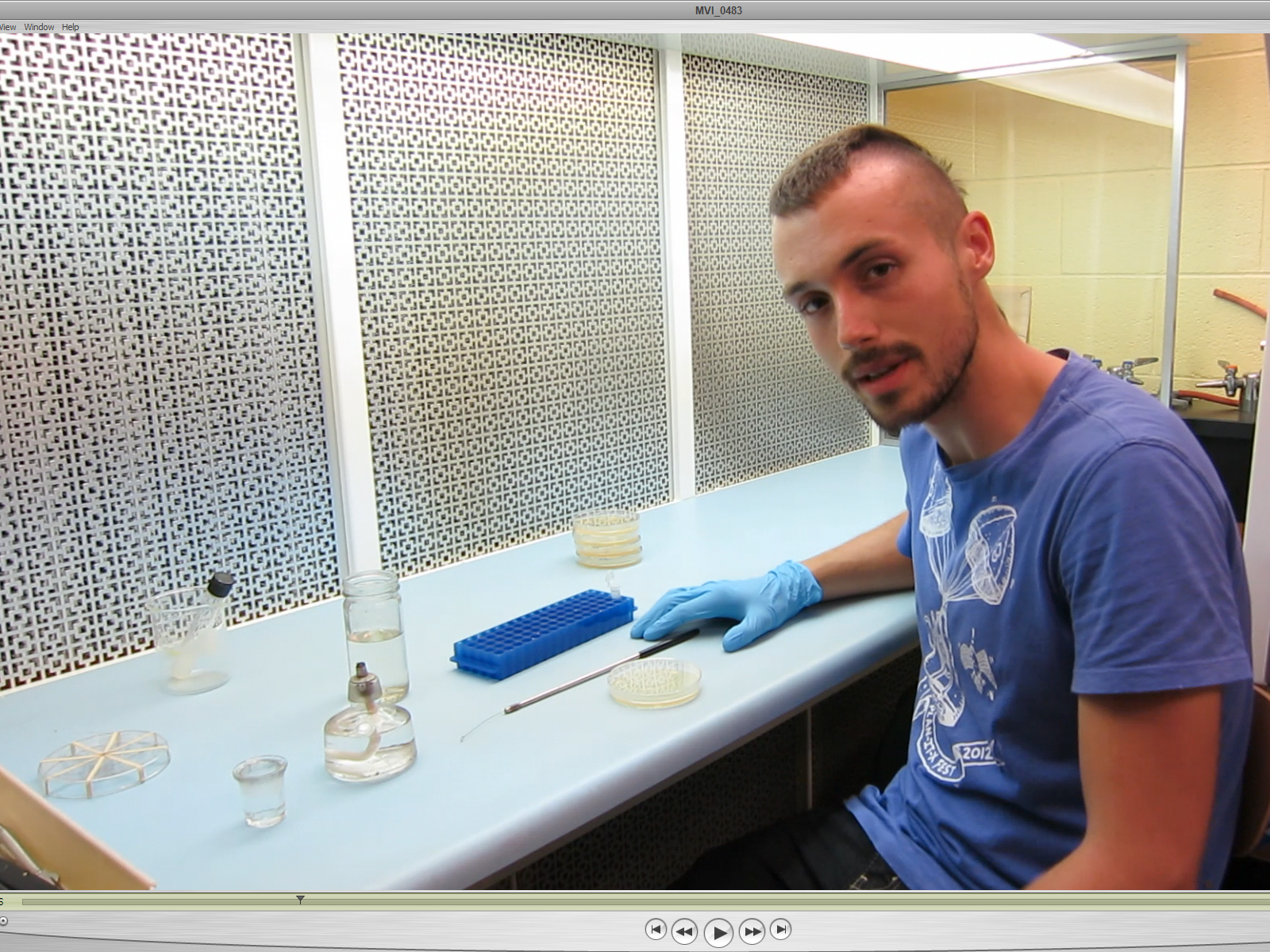
When dealing with a plant sample, the first step is generally to determine the causal agent of the problem: abiotic factor, fungi, bacteria, or a virus. Once this is determined, each agent has a different method of approach. Today we will be dealing with a bacterial pathogen, so the first step is going to be the search for the illustrious bacterial ooze. Plant pathogenic bacteria have an interesting property in that they will “ooze” out of tissue when sliced. With a large enough (and well infected) sample, this can actually be seen in a beaker or glass of water. With a smaller sample, a small section of infected tissue is sliced, preferably at a transition zone, and then mounted onto a slide. Under the scope, along the edges of the cut tissue, bacteria can be seen streaming out in what can be best described as a mist or a cloud. Once this is found, we can move onto the next step, the best step, the culturing step.
 Bacterial ooze!

The transition zones mentioned previously are next going to be used to make up our nasty and kind of creamy bacterial broth. These zones are selected, cut, and then surface sterilized with a quick dip in a 10% bleach solution. Following this is a quick dip in distilled water, they are then left to dry in the crease of a paper towel in our flow hood. Once air dried the sample material is placed in a test tube of sterile water, shaken up, and left to sit for at least 30 minutes. This is when the bacteria start streaming out into the water, making what can be best described as a “broth” of bacteria. This nasty little tube of liquid is what will be used to culture out our bacteria.


 In this case, we suspect a Pseudomonas bacteria, so we have chosen Kings B or Pseudomonas Agar. This medium is pretty cool in that most bacteria will grow just fine on it, but if a Pseudomonas bacteria is cultured on it. This agar will glow under UV or blacklight, once there has been adequate bacterial growth. The Plant Clinic cultures its bacteria in two ways, either by spread plates or streak plates. Both techniques are quite easy, with each having its own benefits. In one technique, an inoculating loop (a small wire loop) is used to grab a droplet of bacteria solution which is then “streaked” over the agar plate.  The other technique is called a spread plate. In this a larger amount of the liquid bacteria solution, 1/10 of a mL, is pipetted onto the plate. A bent glass rod is then used to “spread” it evenly over the surface of the media. 

Hopefully you found this quick look behind the scenes at the U of I Plant Clinic to be informative (and hopefully somewhat interesting too).

Monday, July 23, 2012

Todd Gleason's Sunday Drive to Determine Illinois #Corn Yields

On Sunday, a member posted the following on a private agronomic Facebook page:

"Do you follow Todd Gleason (University of Illinois Farm Broadcaster) on Twitter? @commodityweek. He just did a big loop today from C-U to Jacksonville and south and back east through Litchfield to Dalton City. They were driving 20 miles, stopping at first corn field @ first culvert and walking in 50 paces and pulling 3 ears in so many steps."

After seeing this post on Facebook, I quickly checked out Todd's posts on Twitter.  If you are interested in corn yields around the state of Illinois, I suggest that you check it out too!

Thanks to the magical world of social media, Todd saw that I was following his "Sunday corn yield journey" and sent me an email with further information and pictures. 


Above is the route and actual field stops.


The above photo is taken near Pana, Illinois, my home county, and can give us some hope that some areas in Illinois may actually have some fair yields.  My Dad farms not too far away from this location, but I don't know that our corn looks this good.  The rains were "hit and miss" and very spotty this year in our area.

Above are Todd's photos of corn ears from each field visit from left to right.  He got an actual "0" in Carlinville, Illinois.