Sunday, April 17, 2011

Will The Oak Galls Kill My Tree?

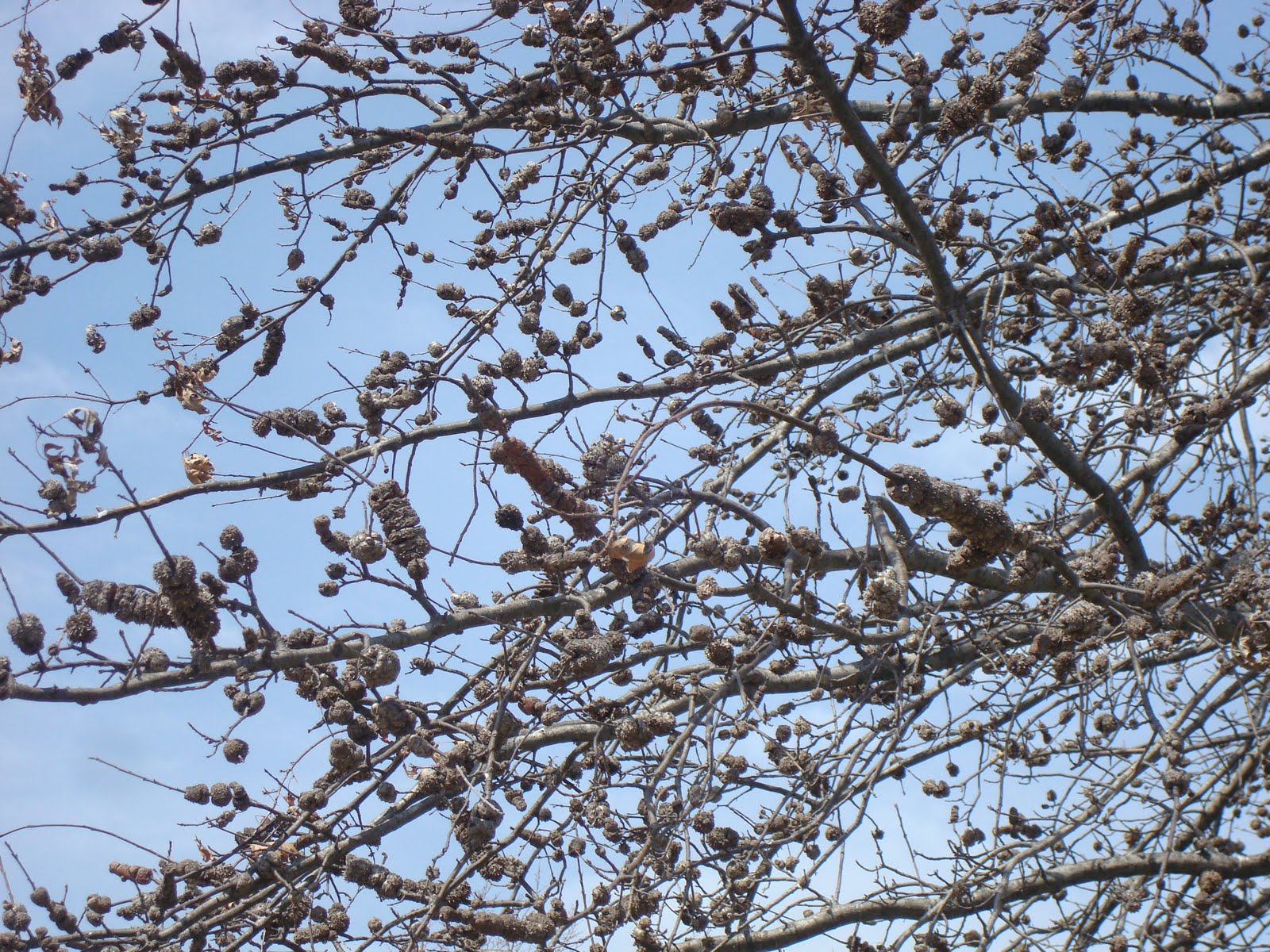
When I was able to teach the IPM (Integrated Pest Management) section of the Master Gardener Training in Champaign, IL, one of the pests that I used as an example was oak gall.  I was stunned to learn that most of the Master Gardener trainees there were not familiar with oak gall.  To be honest, I can't go a week without getting asked about oak galls in my neck of the woods.  In the last several years, the wasp species that causes various oak galls in oaks have been on the rise in the St. Louis, MO and Springfield, IL vecinity.  In these "hot spots", if trees are present along a road, you can easily identify oak trees by their sometimes, obvious galls protruding from their limbs. 

Here is a great fact sheet about oak galls:  http://web.extension.illinois.edu/southern/downloads/24689.pdf

Spring is here and homeowners are starting to work in their yards. If their oaks are plagued with oak galls, they "stick out like a sore thumb" right now, because oaks have not leafed out.  The most common question that we hear is: "Will the oak galls kill my tree(s)?"  The answer is NO, the oak galls will not kill your tree.  Phil Nixon, University of Illinois Extension Entomologist says that it is sometimes very hard for someone to believe this when their oak tree is just thick with oak galls. Oak galls can girdle and kill branches, which in turn, can cause them to fall to the ground, and make them lethal weapons when hit by a lawn mower.

 Here is a specific example to help explain why a tree infected with oak galls might die.

I went to church and was asked what to do about the oak on the church's property that was infected with oak gall. Here is the poor tree:


This is probably the worst case of oak gall that I have seen.  Why might this be?  Why is this oak so loaded with oak galls? When trees are stressed, they can be more susceptible to insects and diseases.  So, I took a good look at this particular oak and asked myself, "What might be stressing this tree?".

The first thing that came to my mind was the stress of cars parking under this oak.  This could compact the soil near this tree, as well as possibly damage roots.  Also, I am sure that this tree has not been fertilized.

In my area, pin oaks seem to be more infected with oak gall.  Pin oaks are notorious for being affected by iron chlorosis: http://web.extension.illinois.edu/forestry/publications/pdf/forest_health/UIUC_Iron_Chlorosis.pdf
Basically, something is causing the iron not to be available to the plant, and causes the leaves to be lighter green in color and have dark, green veins.  Here is a picture of a pin oak with iron chlorois from the ISU Plant Disease Clinic:
Iron chlorosis is just one more possible stress on an oak that could be causing them to be more vulnerable to infection by the oak gall wasp.  Other possible stresses to an oak tree could be: improper planting, planted near construction or concrete, drought, too much water, mower damage, overfertilization, underfertilization, improper pruning, and so on. 

In conclusion, if an oak tree has oak gall and it dies, it probably did not die due to just the oak gall.  It most likely died because of multiple issues: stresses or disease, along with the oak gall infection.

Monday, April 11, 2011

Lawn Problems: Where do I start?

First, I would like to start out with the disclaimer: I AM NOT A TURF EXPERT, however, I have been asked to help with a few turf problems.  Many think they can just throw out some grass seed in their yard, and a lush, green, lawn will grow.   But sometimes, it's not that easy. 
Here is an example of one of the problems that I recently helped to solve.  This is a commercial site, where experts were called in to produce an estabishment of grass.  So, this is not your everyday lawn, however, the basical principles are the same here.  Finally, after 2 years of not getting the growth of grass that they wanted, they began to call as many experts as they could to try to get to the bottom of why they could not get a good establishment of grass. 

The very first question that I asked was if this site consisted of alot of clay, and their answer was, "Yes, there could be some clay there."  The next question that I asked was if they had a soil test.  Their answer was, "We just took soil samples."  I said that I did not want to go any further without seeing their soil test results.  It was too bad that they did not soil sample 2 years previously, when this grass was first planted, because I just found out that the soil tests revealed that they had soils with a pH of 8!  Turf grows best at a pH of 6 - 7.  They will now need to add sulfur to try to raise the pH. 

Here is a good website to help with site preparation in lawns-
http://urbanext.illinois.edu/lawnchallenge/lesson3.html

Here is a list of soil testing labs in Illinois-
http://urbanext.illinois.edu/soiltest/

Here is a website that explains other problems in turf-
http://urbanext.illinois.edu/lawntalk/weeds.cfm

Here a factsheet on spring lawn care-
http://web.extension.illinois.edu/springfieldcenter/downloads/9010.pdf

I really like this "oldie, but goodie" article by Sandy Mason-(fall is an ideal time to seed a lawn)
http://web.extension.illinois.edu/champaign/homeowners/040904.html

Friday, April 1, 2011

And The First Plant Sample Submitted to the Plant Clinic is..... (insert Drum roll here)..... Pine Wilt Disease


This little critter and his friends killed a windbreak of 30 pines.  This is a pinewood nematode.

This pinewood nematode is in the vascular system of a pine (like the picture above) and is causing the disease Pine wilt.  This, in turn, will lead to a dead pine. 

The pinewood nematode "hitches a ride" on the pine sawyer beetle.  These beetles devour pine trees in the spring and can infect a pine near you.  Pines under stress are more prone to be killed by the pinewood nematode.  Depending on the size of the pine tree, it can take 1 to 2 years for it to die from the infection of the pinewood nematode.

Here are some great web resources to learn more about pinewood nematode and Pine wilt disease:
http://web.aces.uiuc.edu/vista/pdf_pubs/1104.pdf
http://urbanext.illinois.edu/hortanswers/detailproblem.cfm?PathogenID=19
http://urbanext.illinois.edu/focus/pinewilt.cfm
http://hyg.ipm.illinois.edu/pastpest/200613a.html

If you suspect that your pine (usually not white pine) has Pine wilt disease, you are welcome to send a sample to the University of Illinois Plant Clinic.  There is a $15 dollar fee.  Please send several foot long branches that are 2 -3 inches in diameter.  Be sure they are from an area of the pine that is showing symptoms, but is not dead!

If your pine is diagnosed with Pine wilt, the tree will need to be removed immediately in order to avoid the infection of other pine trees!

Thursday, March 24, 2011

Going to Plant Trees? Check This Out First!


So, what do all of these tree pictures have in common? In my past Extension days, I made a few tree calls and this is what I found.  These business and homeowners wanted to know what was wrong with their trees?  Was it a disease or an insect?  I had to be the bearer of bad news and let them know that these trees were not planted correctly!

If you look at the base of a tree, there should be a flare or the tree’s root collar should be above the ground.  If you look at the base of a tree and it goes directly into the ground, it is planted too deeply (like the last 4 pictures).  Also, remember to remove any burlap or wire baskets before planting a tree.  If a tree is planted incorrectly, it may survive several years; however, eventually, it will gradually start to decline. Tree decline intinsifies during time of stress like last year's weather (extreme wet, then dry) or other problems such as cars driving on roots or construction near roots.  Tree decline may look like the last 3 pictures in this blog.

Another problem that I have encountered is girdling roots (Look at the first 3 pictures).  In some instances, if you look near the base of a declining tree, you can see roots growing in a circular pattern.  But, in other cases, you can’t see any signs of strangling or girdling roots.  When planting a tree, make sure roots are not winding around and spread them out in a wide hole.  If a tree has girdling roots, naturally this will choke the tree and not allow nutrients to properly flow up into a tree.  Strangling roots will also cause a gradual decline of a tree.
So, please plant a tree this spring, but do it correctly!  There is nothing much you can do for a tree in decline due to incorrect planting!
Here is a great factsheet to use as a guide:  http://web.extension.illinois.edu/winnebago/downloads/706.pdf

Friday, March 18, 2011

Can You Hear the Crabgrass Germinating?


Even if you don't claim to be an expert at identifying weed species, most people know that those big dead patches in the lawn are crabgrass.  Those unsightly, crabgrass patches are becoming even, more noticable in my neighborhood, due to spring, greening of turf.  Everytime I see a crabgrass patch, I think of a local client that called our Extension office repeatedly with questions on how to control crabgrass.  He had officially declared crabgrass, "Arch Enemy #1", and he was going to do everything in his power to defeat it!  I know he is not alone in his fight with crabgrass! 

The reason I chose this topic today is because crabgrass seeds will begin to germinate during the spring and early summer when soil temperatures start reaching 60 degrees F for five consecutive days.  I think Central Illinois soils are approaching these conditions very soon.  Also, according to David Robson,
"Pre-emergence chemicals should be applied one to two weeks prior to the time when soil temperatures reach 50 degrees F for three consecutive days. For this reason, in a typical year crabgrass applications should be applied by April 1 for best control in central Illinois. Add a week or two as you move farther north, and subtract a week or two going south."  So, get ready!!!!!!  Last year, there were alot of issues with pre-emergence chemical control of crabgrass, because of the wet spring conditions!

Some helpful tips for controlling crabgrass (outlined in helpful Extension website links below):
  • Your mowing height should be over 2 inches!
  • Light, frequent waterings may help your lawn, but it also promotes growth of crabgrass!
  • If applying a pre-emergence herbicide, timing is critical when controlling crabgrass!
If you get frustrated with your crabrgrass control fight, remember this:
CRABGRASS IS AN ANNUAL PLANT, SO IT WILL DIE WHEN TEMPERATURE DROP IN THE FALL!  But, you must plan your attack the following spring : )

Here are some University of Illinois Extension links that may help you with our fight against crabgrass:


GOOD LUCK, my friends!

Friday, March 11, 2011

Spring is Coming and so are Those Plant Problems: Winter Burn of Boxwood


The boxwood shrub on the right seems to be showing signs of winter burn.  This browning can show up when temperatures start to warm up after winter.  Basically, winter burn can occur on all plants that have their foliage exposed in the winter, such as:  some conifers (pines and spruces), boxwood, holly, and rhododendrons.  I have been seeing signs winter burn on pine windbreaks. 

Winter burn or dead foliage is not a result of cold temperature injury or disease.  Basically, plants transpire or release water from foliage (photosynthesis) and a higher rate of water loss from foliage may result in high winds.  If the ground is frozen or dry, these plants are unable to replace this water loss.  The result is can be dehydration, foliar damage (winter burn), or even death. 

What can you do about winter burn?
1.)  When landscaping, choose plants that are less likely to be prone to winterburn
2.)  Avoid planting conifers, boxwood, holly, and rhododendrons in areas that have high wind exposure
3.)  You could put up a wind break to protect the plant
4.)  You could wrap small plants in burlap or other material to protect from wind and water loss
5.)  Products called "antitranspirants" can be applied to winter burn prone plants, but there is no research available, that I know of, that would prove their effectiveness.
Boxwoods can be pruned in the spring in order to remove any injury that has resulted in the winter.

Monday, March 7, 2011

Women Changing the Face of Agricuture Conference

The Women Changing the Face of Agriculture Conference was held on March 4th, 2011 at the Bone Student Center-ISU, Normal, IL.  We had several participate from the University of Illinois College of ACES, and this is a picture of our "Intigrated Pest Management team" which was represented by those who work in Crop Sciences as well as the Illinois History Survey.  Believe it or not, we have an insect, plant disease, and weed chick represented here!  From left to right:  Kelly Estes, State Survey Coordinator, Illinois Cooperative Agriculture Pest Survey, Stephanie Porter, Visiting Plant Diagnostic Outreach Coordinator/Plant Clinic Dianostician, Crop Sciences, Michelle Wiesbrook, Pesticide Safet Specialist, Crop Sciences...and not wanting to be in the picture is Suzanne Bissonnette, IPM Coordinator/Plant Clinic, U of I Extension.

At the conference, we were able to visit with several girls that were interested in a career in agriculture.  Their ages seem to range from a Freshmen in High School to Sophomore in College.  After chatting with the girls, we tried to get a feel for what interests they had.  To our surprise, many were interested in Animal Science; however many were undecided on what they wanted to do with their lives.

I think we learned alot not only from the girls that attended this conference, but alot about each other! I learned that Kelly Estes,who showed animals and was active in 4-H, was an Animal Science major until she was a Junior in College and then changed to a Crop Science major after taking an Entomology class.  Stephanie Porter had her heart set on Biotechnology, but later changed her concentration to Plant Pathology, after having completing a Plant Disease course. Michelle Wiesbrook, raised on the farm, had her mind set on NOT pursuing a career in agriculture, but was steered into the ag business field by her local ag teacher, and later learned she was interested in Weed Science. Suzanne Bissonnette, was a city girl, started out in Pre-Med, and later switched over to a Plant Pathology doctoral degree, which then led her to her career in agriculture. We all realized that we ended up in careers that we could of never imagined!  Who would of ever thought that we would like bugs, fungus, and weeds?

From these experiences, we illistrated to the girls in attendance, that it is OK not to know what career path to take, but recommended that they take alot of different courses and, if possible, experience some different internships to figure out exactly what they like....and, more importantly, what they don't like.